
Departments
About the department of Civil Engineering
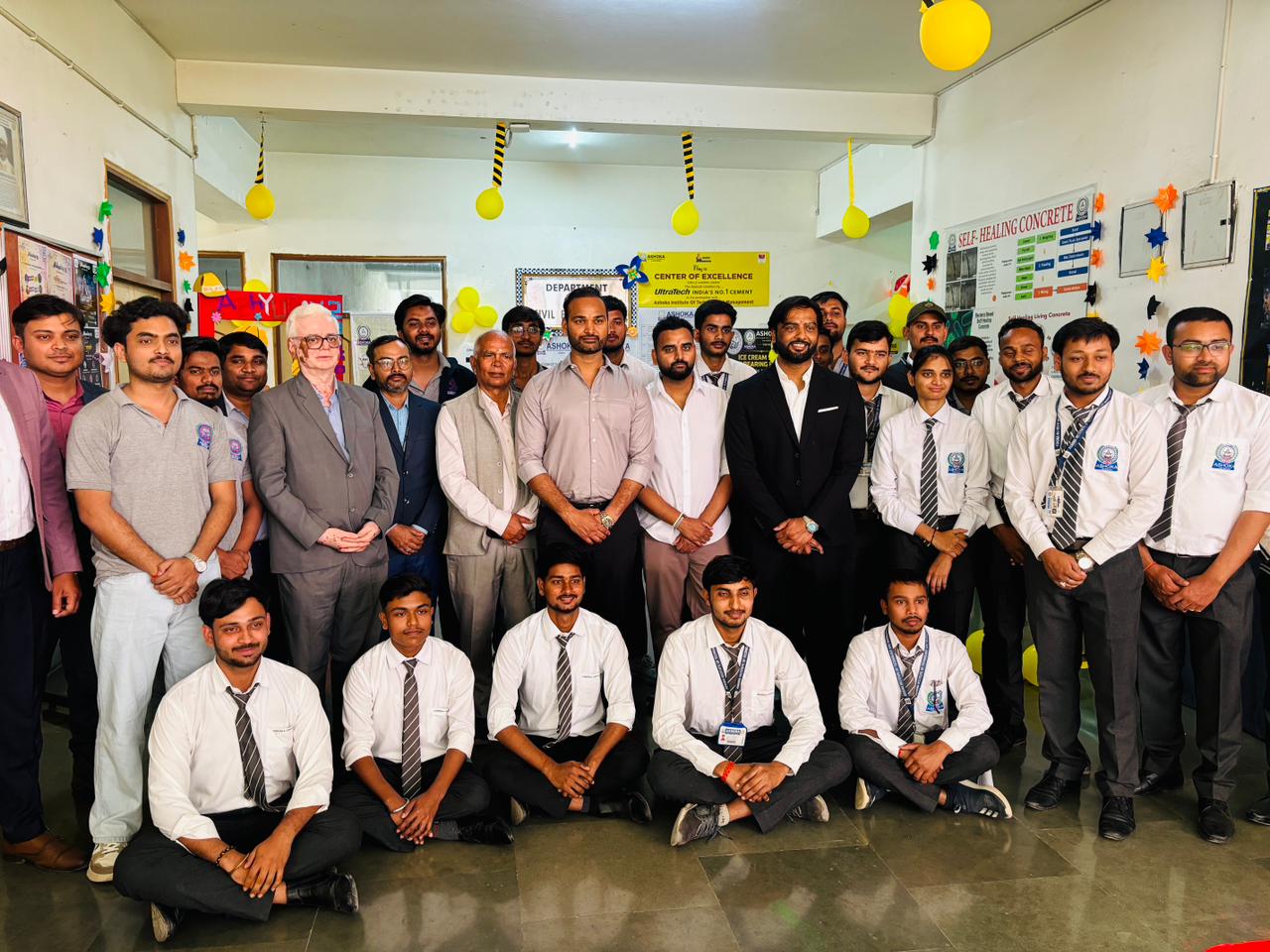
Civil Engineering at Ashoka has been established in 2010, with the objective of integrating life sciences with engineering and to develop cutting-edge technology through research, training and technological innovation. Since its inception, the department has witnessed a consistent rise in the students demand for the subject. The department is well equipped with the all-necessary instruments and number of research facilities. The department has a young, enthusiastic and well qualified faculties actively involved in research and teaching. The teachers are available to the students for academic as well as personal counseling. The well qualified, experienced and dedicated faculty and supporting staff are striving hard tirelessly to improve upon the quality of education through effective teaching learning process. Teaching methodology at Civil Engineering Department ensures a perfect balance of theory and practical learning throughout the four years of Course. The Department has ten laboratories with latest equipment’s for enriching practical experience of students. Here, students are getting equipped with the practical skills required on the onset of their professional life as a graduate engineer. The Department ensures to give to the society a professional with sound understanding of the subject ready to take up his role and challenges coming his way.
Vision & Mission

Vision of Department
To become an institute of International Standards with human values through continuous improvement with the help of our dedicated faculty & supporting administration

Mission of Department
To impart world class education in engineering, technology, pharmacy and management, to enhance research and development, encourage creativity, promote innovation, build leadership, entrepreneurship, nurture team work and delight all the stakeholders.
POs
PO1: Engineering Knowledge: Apply knowledge of mathematics, natural science, computing, engineering fundamentals and an engineering specialization as specified in WK1 to WK4 respectively to develop to the solution of complex engineering problems.
PO2: Problem Analysis: Identify, formulate, review research literature and analyze complex engineering problems reaching substantiated conclusions with consideration for sustainable development. (WK1 to WK4)
PO3: Design/Development of Solutions: Design creative solutions for complex engineering problems and design/develop systems/components/processes to meet identified needs with consideration for the public health and safety, whole-life cost, net zero carbon, culture, society and environment as required. (WK5)
PO4: Conduct Investigations of Complex Problems: Conduct investigations of complex engineering problems using research-based knowledge including design of experiments, modelling, analysis & interpretation of data to provide valid conclusions. (WK8).
PO5: Engineering Tool Usage: Create, select and apply appropriate techniques, resources and modern engineering & IT tools, including prediction and modelling recognizing their limitations to solve complex engineering problems. (WK2 and WK6)
PO6: The Engineer and The World: Analyze and evaluate societal and environmental aspects while solving complex engineering problems for its impact on sustainability with reference to economy, health, safety, legal framework, culture and environment. (WK1, WK5, and WK7).
PO7: Ethics: Apply ethical principles and commit to professional ethics, human values, diversity and inclusion; adhere to national & international laws. (WK9)
PO8: Individual and Collaborative Team work: Function effectively as an individual, and as a member or leader in diverse/multi-disciplinary teams.
PO9: Communication: Communicate effectively and inclusively within the engineering community and society at large, such as being able to comprehend and write effective reports and design documentation, make effective presentations considering cultural, language, and learning differences.
PO10: Project Management and Finance: Apply knowledge and understanding of engineering management principles and economic decision-making and apply these to one’s own work, as a member and leader in a team, and to manage projects and in multidisciplinary environments.
PO11: Life-Long Learning: Recognize the need for, and have the preparation and ability for i) independent and life-long learning ii) adaptability to new and emerging technologies and iii) critical thinking in the broadest context of technological change. (WK8)
PEOs
PEO1: To produce proficient engineers with sound conceptual knowledge of Civil Engineering.
PEO2: To prepare students for higher studies, research & development in specialized areas of Civil Engineering and allied fields.
PEO3: To develop the ability on entrepreneurship and commitment towards building sustainable environment.
PSOs
PSO1: To develop the ability to apply the principles and practices of Civil engineering and interdisciplinary knowledge for designing and developing solutions for societal needs.
PSO2: To prepare students on emerging technologies for catering the needs of industry, academia and research.
Faculty Members





| Sr. No | Title | View | Download |
|---|---|---|---|
| 1 | CE_Notice for industrial report | View | Download |
| 2 | CE_notice For newsletter | View | Download |
| 3 | CE_7th Sem Project Presentation | View | Download |
| 4 | CE_IEI Notice | View | Download |
| 5 | CE notice Industrial visit | View | Download |
| 6 | Practical Notice -Civil 2nd Year | View | Download |
| 7 | WORLD WATER DAY | View | Download |
| 8 | ESTIMATION COSTING GUEST LECTURE | View | Download |
| 9 | DUGC MEETING | View | Download |
| Sr. No | Title | View | Download |
|---|---|---|---|
| 1 | Design of Steel Structure | View | Download |
| 2 | Engineering Hydrology | View | Download |
| 3 | Environment and Ecology | View | Download |
| 4 | Estimation & Costing | View | Download |
| 5 | Geotechnocal Engineering | View | Download |
| 6 | Railways, Waterways and Airways | View | Download |
| Sr. No | Title | View | Download |
|---|---|---|---|
| 1 | IS 456:2000 | View | Download |
| 2 | IS 13920-2016 | View | Download |
| 3 | SP 34-1987 | View | Download |
| 4 | IS-1893-2002 | View | Download |
| 5 | IS 800:2007 | View | Download |
| 6 | IS 3370:2009 | View | Download |
| 7 | IS 1343:1980 | View | Download |
| 8 | IS 455:1989 | View | Download |
| 9 | IS 383:1970 | View | Download |
| 10 | STEEL TABLE | View | Download |