
Departments
the Electrical Engineering
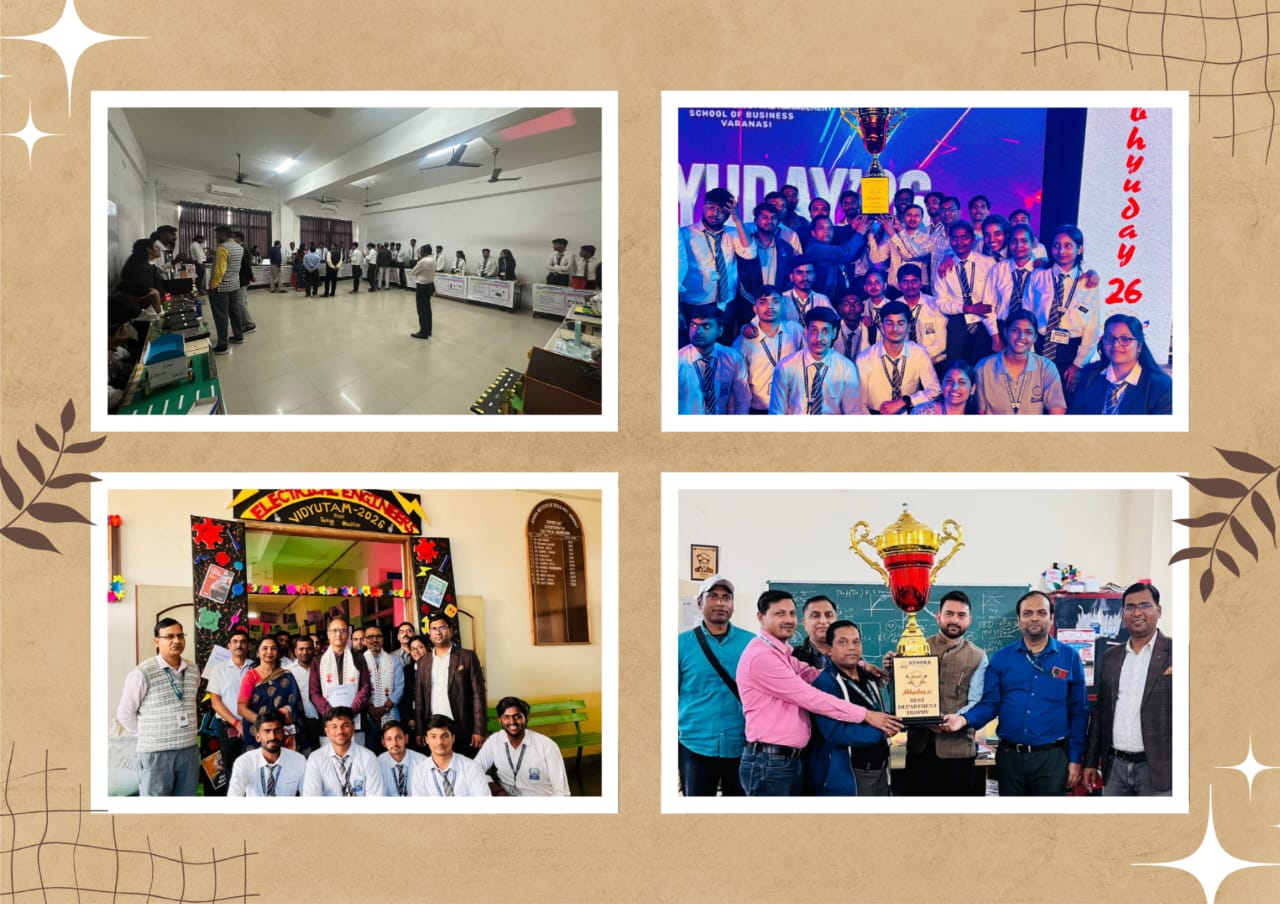
The department offers a vibrant environment for education and research in electrical engineering. Our mission is to provide quality education in the field of Electrical Sciences and help the students to design and develop products and practical solutions for problems in public and private sectors. Department of Electrical Engineering is currently offering B. Tech. in Electrical Engineering (EE).
Since its inception, this department has contributed significantly to the growth of Electrical Engineering education and research in India. Many alumni of the department have distinguished themselves in academic institutions, research laboratories, industries and government organizations, both in India and abroad.
The Department has online access to IEEE explore digital library, Science Direct, Springer and other online journals. Software like MATLAB, PSPICE and PSIM are available with the Department in order to accelerate the research. Laboratories are fully operational and well equipped with latest equipments to make the students understand the practical aspect of electrical science. Faculty members are dedicated scholars from IITs, NITs and other premier institutes and are committed to advancement of knowledge.
Electrical Engineering is one of the fastest growing fields that involves the study and application of electricity and electronics. It is the most interesting branch of engineering because it involves the study of computer, electrical and electronics and communication. Electrical engineering deals with generation, transmission and distribution of electricity.
Job opportunities are ample in both private and public sectors like railways, civil aviation, electricity board and utility companies, electrical design and consultancy firms and all types of manufacturing industries.
Vision & Mission

Vision of Department
To become an institute of International Standards with human values through continuous improvement with the help of our dedicated faculty & supporting administration

Mission of Department
To impart world class education in engineering, technology, pharmacy and management, to enhance research and development, encourage creativity, promote innovation, build leadership, entrepreneurship, nurture team work and delight all the stakeholders.
Program Outcomes (POs)
PO1: Engineering Knowledge: Apply knowledge of mathematics, natural science, computing, engineering fundamentals, and an engineering specialization, as specified in WK1 to WK4, respectively, to develop solutions to complex engineering problems.
PO2: Problem Analysis: Identify, formulate, review the research literature, and analyze complex engineering problems, reaching substantiated conclusions with consideration for sustainable development. (WK1 to WK4)
PO3: Design/Development of Solutions: Design creative solutions for complex engineering problems and design/develop systems/components/processes to meet identified needs with consideration for the public health and safety, whole-life cost, net zero carbon, culture, society, and environment as required. (WK5)
PO4: Conduct Investigations of Complex Problems: Conduct investigations of complex engineering problems using research-based knowledge, including design of experiments, modelling, analysis & interpretation of data to provide valid conclusions. (WK8).
PO5: Engineering Tool Usage: Create, select, and apply appropriate techniques, resources, and modern engineering & IT tools, including prediction and modelling, recognizing their limitations to solve complex engineering problems. (WK2 and WK6)
PO6: The Engineer and the World: Analyze and evaluate societal and environmental aspects while solving complex engineering problems for their impact on sustainability with reference to economy, health, safety, legal framework, culture, and environment. (WK1, WK5, and WK7).
PO7: Ethics: Apply ethical principles and commit to professional ethics, human values, diversity and inclusion; adhere to national & international laws. (WK9)
PO8: Individual and Collaborative Teamwork: Function effectively as an individual, and as a member or leader in diverse/multi-disciplinary teams.
PO9: Communication: Communicate effectively and inclusively within the engineering community and society at large, such as being able to comprehend and write effective reports and design documentation, and make effective presentations considering cultural, language, and learning differences
PO10: Project Management and Finance: Apply knowledge and understanding of engineering management principles and economic decision-making and apply these to one’s own work, as a member and leader in a team, and to manage projects and in multidisciplinary environments.
PO11: Life-Long Learning: Recognize the need for, and have the preparation and ability for i) independent and life-long learning ii) adaptability to new and emerging technologies and iii) critical thinking in the broadest context of technological change. (WK8) emerging technologies and iii) critical thinking in the broadest context of technological change. (WK8)
Program Educational Objectives (PEOs)
PEO1: To have comprehensive knowledge of engineering fundamentals to solve engineering problems for a successful career in industry and research.
PEO2: To design and develop solutions in the areas of Electrical Engineering and allied disciplines.
PEO3: To acquire expertise in leadership skills, ethical practices, with concern for green technology.
Program Specific Outcome (PSOs)
PSO-1: Ability to use fundamental and advanced approaches of Electrical Engineering, modern tools, techniques, and methodologies to design and develop solutions.
PSO-2: Apply the knowledge of electrical engineering in innovative, dynamic, and challenging environments for cutting-edge engineering solutions for diverse engineering fields.
Faculty Members


| Sr. No | Title | View | Download |
|---|---|---|---|
| 1 | Regarding the Internship Assessment Viva for course BEE 752 | View | Download |
| 2 | Regarding to internal practical CT-1 Examination odd sem 2025-26 | View | Download |
| 3 | the Regarding to Mini Project Assessment Viva for course code BCC-351 & BEE-554 odd Sem 2025-26 | View | Download |
| 4 | Regarding to the extra lectures scheduled for 3rd Sem, 5th Sem and 7th Sem, 2025-26 | View | Download |
| 5 | Regarding to the External Practical Examination of Minor Degree , odd Sem, 2025-26 | View | Download |
| 6 | Regarding to the External Practical Examination of 1st Semester, 2025-26 | View | Download |
| 7 | Regarding to the External Practical Examination of 7th Semester, 2025-26 | View | Download |
| 8 | Regarding to the External Practical Examination of 3rd Semester 2025-26 | View | Download |
| Sr. No | Title | View | Download |
|---|---|---|---|
| 1 | Control System Notes_1 | View | Download |
| 2 | Control System notes_2 | View | Download |
| 3 | Control System Notes_3 | View | Download |
| 4 | Control System Notes_4 | View | Download |
| 5 | Control System Notes_5 | View | Download |
| 6 | Control System Notes_6 | View | Download |
| 7 | Control System Notes_7 | View | Download |
| 8 | Control System Notes_8 | View | Download |
| 9 | Control System Notes_9 | View | Download |